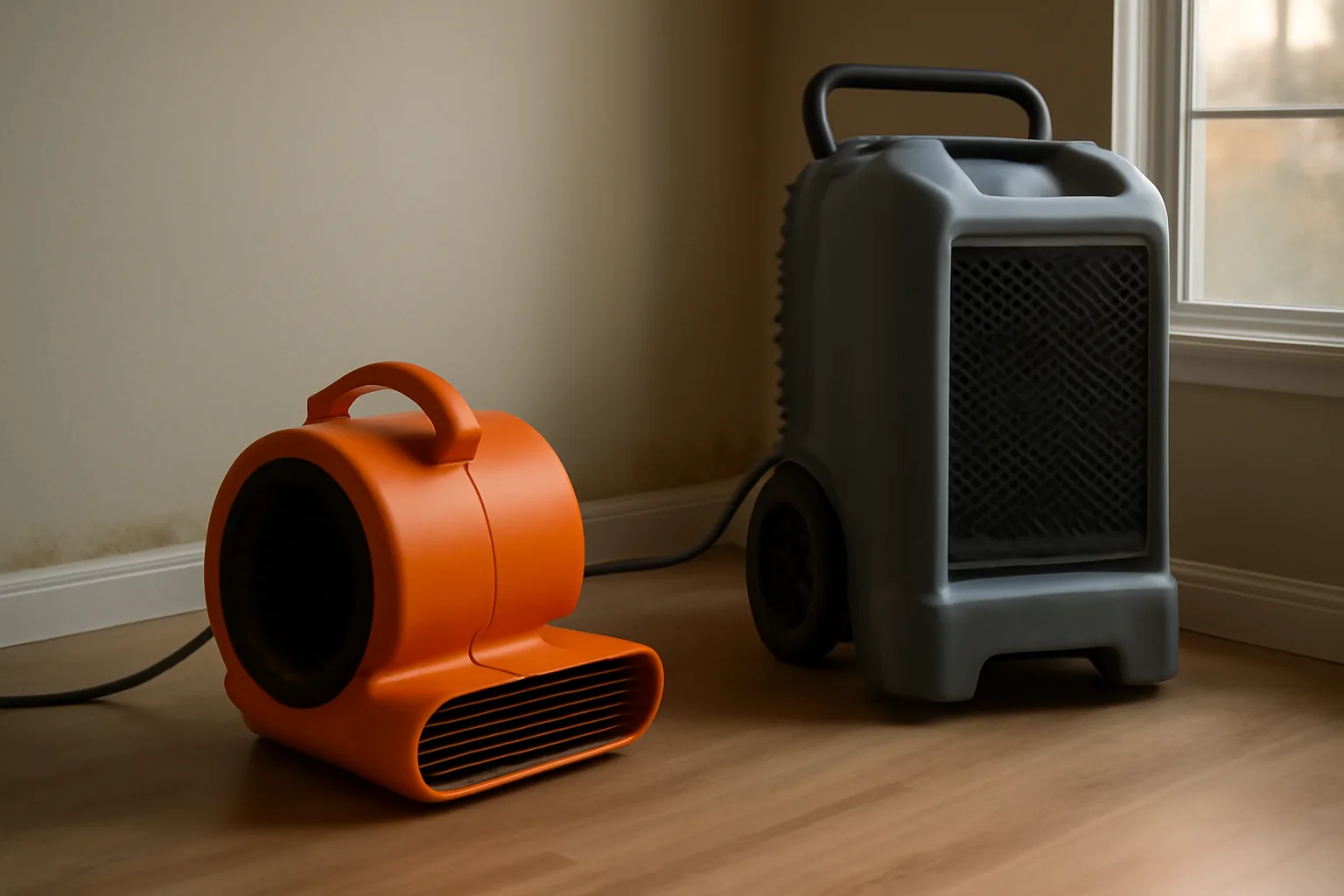
A fire in a Eatontown home leaves two problems running at once: the damage the flames caused and the water the suppression left behind. HarborPoint Restoration stabilizes the opening, dries the saturated areas, and maps soot travel through the HVAC and wall cavities in one coordinated push. A Eatontown home with a central return pulls smoke into the ductwork fast, so the HVAC is always part of our survey. We photograph and inventory the contents we pack out, giving your adjuster a clear record of what was salvaged and what was lost. One call to 551-237-7564 starts the smoke recovery the same day.
How Fire And Smoke Damage Really Spreads
Even a small kitchen fire can push smoke through an entire floor, coating surfaces rooms away. Soot deposited inside the HVAC becomes an odor reservoir that pushes residue back into the living space every time the system runs.
Our crew secures the structure, pulls the water the fire crew left, and cleans soot from the surfaces it actually reached — not just the obvious ones. We log the deodorization method and the surfaces treated so the odor work is provable rather than assumed.
The HVAC Side Of A Fire Loss
If the smoke smell came back weeks after the work, the odor was masked, not removed. Containment keeps residue from spreading during cleaning, and HEPA filtration captures the airborne soot the work releases.
The HVAC decision is documented either way, so the carrier sees why the scope reads the way it does. We finish on odor, not on appearance, because appearance is the easy part of a fire loss.
Why We Dry Before We Clean Soot — For Owners
The fire department does its job well, and what it leaves behind is a soaked building that starts to mold if left wet. The water carries soot deeper into porous materials, so leaving it in place spreads the contamination further.
Our crew pulls the water the fire left, sizes drying equipment to the saturation, and tracks the dry-down to standard. Drying the structure properly is half of a fire restoration done right, and the half most owners do not expect.
The fire department does its job well, and what it leaves behind is a soaked building that starts to mold if left wet. That is why our fire response opens with stabilization and extraction, not just soot and odor — the water cannot wait. Drying and soot cleaning run together, sequenced so the wet framing is never left to sit while the surfaces get cleaned. Wet soot smears and etches the longer it sits, so the moisture has to come out before it sets the residue permanently.
How Smoke Residue Keeps Working — The Essentials
Soot is not inert; it is corrosive, and the clock on permanent staining starts the moment the fire goes out. The etching is cumulative, so the response window decides how much of the home survives the smoke.
We move fast on soot precisely because the residue is corrosive, treating it before it etches anything permanently. That is why fire cleanup is urgent in a way the visible burn area does not make obvious.
Soot is acidic, and it keeps corroding metal, glass, grout, and finishes for as long as it sits uncleaned. The sooner the residue is treated, the more of the home is cleaned rather than refinished or replaced. We map the soot travel through cavities and ductwork, then clean each affected surface on its own terms. The etching is cumulative, so the response window decides how much of the home survives the smoke.
What A Pack-Out Actually Means — The Real Picture
A complete fire response covers the contents, not just the rooms, because the smoke does not stop at the drywall. Items that can be cleaned are removed, treated off-site, and protected; items beyond saving are documented before disposal.
The inventory ties each item to its condition, so the adjuster can see exactly what the smoke and water reached. A documented pack-out is what keeps the contents claim from becoming an afterthought the carrier underpays.
Beyond the walls and framing, a fire affects the contents of a home, and those have their own recovery path. Handling contents in-house means there is no separate restoration vendor for the adjuster or the owner to coordinate. We record the salvageable and the unsalvageable both, so nothing in the contents claim relies on memory. We sort the contents into salvage and loss, clean the salvage in a controlled environment, and record the rest for the claim.
Where this service connects to the rest
A {city} loss almost always touches more than one service — fire damage restoration often overlaps with water extraction, storm cleanup, mold removal, sewage backup recovery, finish carpentry and rebuild, and we handle the overlap so you do not juggle trades. That same standard rolls out to and everywhere else across Monmouth County.
If you searched for restoration company near Eatontown, Whichever you need, a crew that meters and documents takes it from there, and we take it from there. Call 551-237-7564 any hour, read Water, Flood, or Seepage: What Your Eatontown Policy Pays on our blog, or head back to our Eatontown home page to see everything we do.